What is the material actually made of?
See the complete construction, the evidence to ask for and the questions a family label cannot answer.
Explore
Materials. Evidence. The next use.
A clearer way to choose materials, keep useful equipment and connect environmental claims to the evidence behind them.
For graphics, displays, exhibitions and the people who make them.
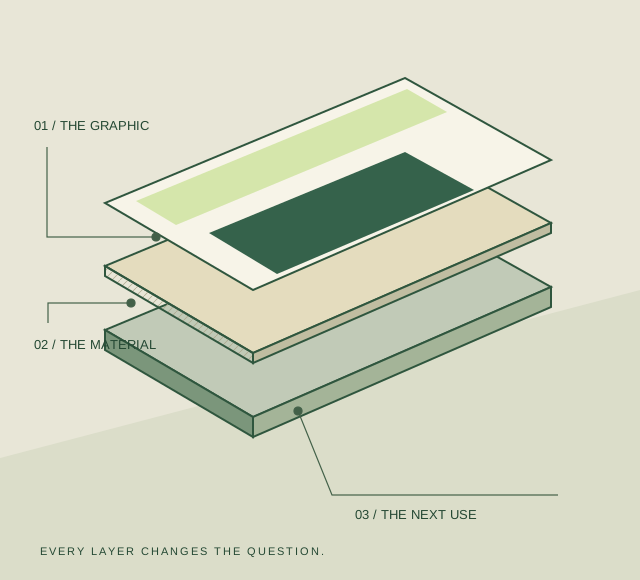
Begin with a useful question
Start with your application, your existing kit, or the claim you need to understand.
See the complete construction, the evidence to ask for and the questions a family label cannot answer.
ExploreInspect condition, confirm compatibility and explore refresh or repair before replacement.
ExplorePrepare an acceptance request and trace the load through receipt, rejection and actual treatment.
ExploreTry a first step
Before choosing a new display, look at the one you already have. One question can help you find the next useful action.
Explore the reuse pathwayThe field notes
A practical brief turns an attractive material sample into a decision you can defend.
ExploreKeep ink, coatings, adhesives, laminates and fixings with the substrate record.
ExploreOne describes an input. The other depends on the item and the system receiving it.
ExploreEvidence has different meanings
Information can be useful without being independently assured. Keep its actual state visible.
A gap to clarify, not a zero value.
Information attributed to its source.
An attributable check for a stated purpose.
An actual assurance result, within its scope.
Keep your questions with your work
Build a brief, compare an option or prepare an evidence request. Download the result and keep it with your project.
Every public tool is free. Start with a practical worksheet; choose whether to save a draft in this browser.